Content:
You invest thousands in content, hire top writers, and buy links, but your website has flatlined. Rankings are stuck in place, and the search traffic graph looks like the cardiogram of a patient in a coma. You blame Google updates and cunning competitors, but the truth is that you are draining your own budget.
Your own pages are “devouring” each other in the fight for Google and Bing’s attention. This is keyword cannibalization — a process in which internal URLs compete for the same queries, literally stealing traffic from one another. Instead of strengthening overall visibility, the pages split it between themselves. There are no winners in this war: Google gets confused, and the site loses rankings in search results.
In this article, Datnera will show you how to identify parasitic pages and make search engines work for your business, not against it.
Many people think that ten articles on one topic are better than one. This is a dangerous misconception. Keyword cannibalization is a strategic mistake in which several pages of the same website compete for the same intent (user intent). In simple terms, it is keyword duplication.

When Google sees two pages targeting the same query, it does not put them all in the TOP. The search engine gets confused and distributes “trust” between them. As a result, instead of dominating in first place, you end up with pages in 15th and 20th positions.
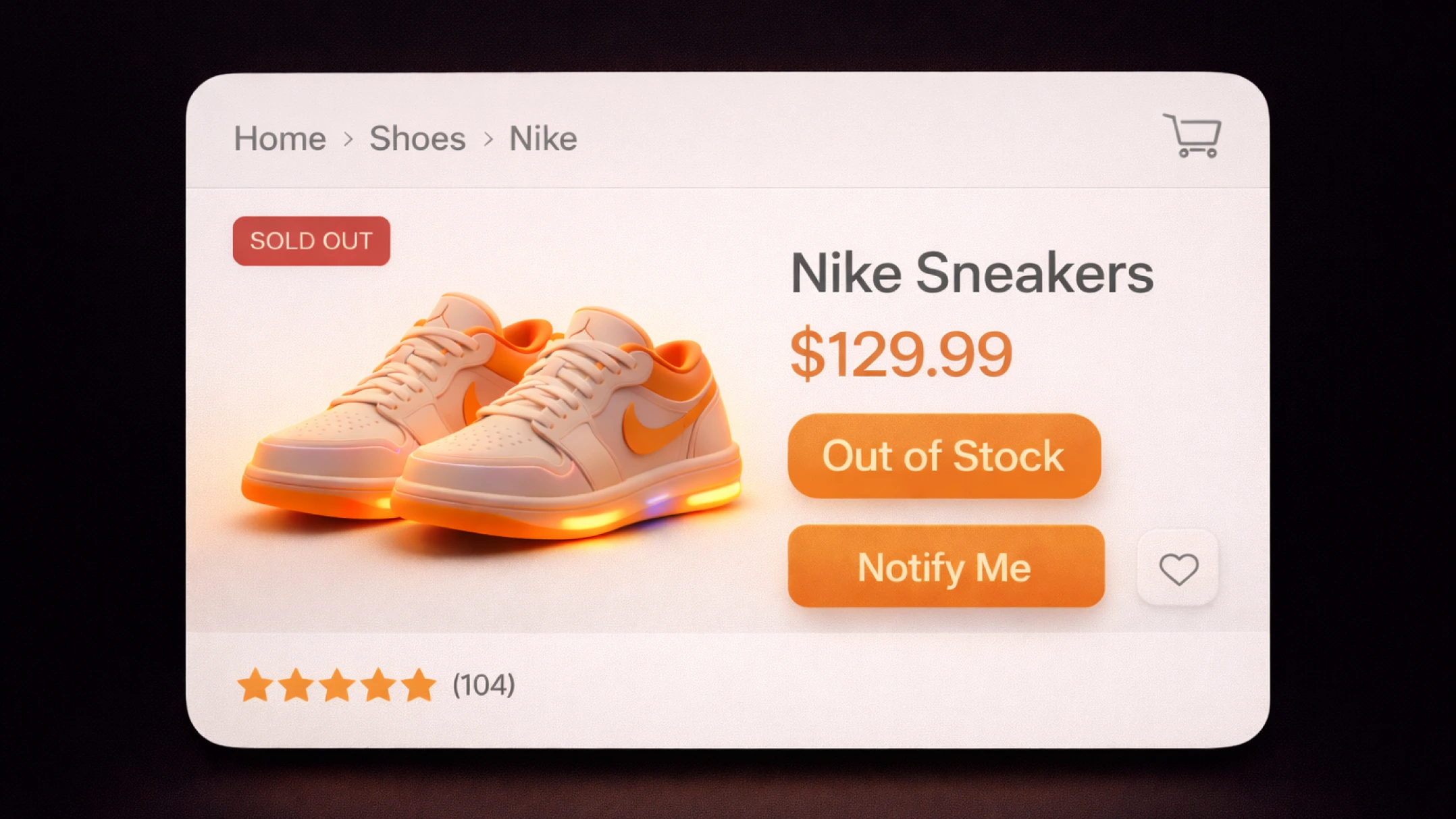
The example of the WoodLand store. They had a commercial product page “Oak Dining Table” and a blog article about the properties of wood optimized for the same keyword. The article was better written, and Google put it in the TOP.
A user wanting to buy a table would land on a long-read about wood species. They would not find a “Buy” button, get frustrated, and leave for competitors. This is not just a technical glitch — it is a site structure crisis that destroys the conversion rate of SEO promotion.
Cannibalization has many faces, and each type requires its own solution. If you do not understand the difference, you will be treating a fracture with a plantain leaf.
This is the classic beginner’s mistake: duplication of phrases in the Title, H1, and URL. When you have three pages called “How to Choose a Vacuum Cleaner,” the search engine simply does not understand which one is the current authoritative source.
The most insidious type. It happens when pages are optimized for different words but serve the same purpose. For Enterprise projects, this is often a conflict between a product URL and documentation.
For example, a SaaS company may discover that their landing page is outranking the [API documentation] for a branded query. A user who has already bought the product needs instructions, but Google serves them advertising instead. The result? Support team rage and loss of loyalty.
This is the case when the meaning of pages overlaps almost 100%. This is often seen in real estate: pages like “Apartments in the Center” and “Housing in the City Center” pull the same properties from one database, creating index bloat.
| Type of Cannibalization | Core Problem | Risk for Website SEO |
| Keyword | Repeated phrases in meta tags | Diluted rankings, drop into the TOP-20 |
| Intent | Conflict of goals (buy vs learn) | Higher bounce rate, lower sales |
| Content | Pages with overly similar meaning | Index bloat, loss of weight |
You pay copywriters to effectively remove pages from the TOP. It sounds insane, but that is exactly what happens with cannibalization. These are invisible losses that kill ROI.
Dilution of authority or link equity is the main problem. Instead of directing all external links to one “super-page,” you split their weight across three weak ones. As a result, a competitor with one strong page outranks you while having half as many links.
Crawl Budget is the resource Google allocates to your website. Two similar pages spend two budget “points” instead of one. Worse, after finding duplicates, Google often reduces the site’s crawl frequency in the future.
As John Mueller from Google says, internal linking should indicate the importance of a page. If links point to different URLs for the same keyword, you are sending the search engine conflicting signals. You are literally making bots doubt your expertise.
As a result, you spend money creating content that is not just useless, but harmful. You pay for your rankings to drop.
Regular SEO auditing is website hygiene. If you do not check your site for cannibalization at least once a month, you risk waking up without traffic.
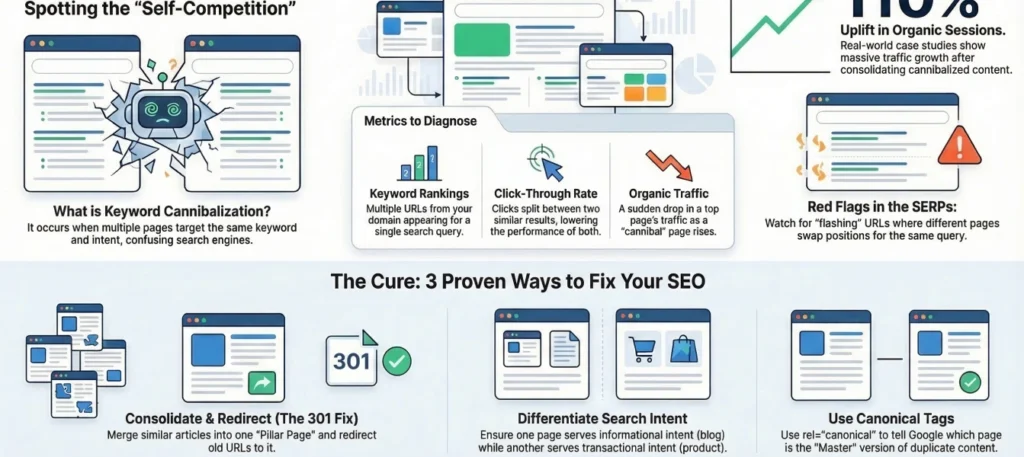
Google Search Console is your main tool. Go to “Performance,” select a filter for a specific query, and switch to the Pages tab. If you see two or more URLs with a comparable number of impressions — congratulations, you have cannibalization.
Use the site:yourdomain.com “keyword” operator. Google will build a list of pages by their relevance to that keyword. If the page in first place is not the one you intended as the landing page — you have a conflict of interest.
In Rank Tracker (SE Ranking or Ahrefs), look for the “flashing” URL effect. If the keyword position in reports constantly jumps between different pages, this is a classic sign that Google cannot choose a favorite.
Also pay attention to indented results in search results. If Google shows two links from your website one under another with an offset — this is a visual signal of cannibalization that requires attention.
Deleting pages is an extreme measure. Before reaching for the scalpel, conduct a full content audit and determine which page brings in more money.

To avoid such situations, you first need to build the semantic foundation of the website. At the start of SEO promotion, all niche keyword queries are collected, then irrelevant ones are removed. After that, the queries are clustered (grouped by meaning and search intent). The resulting clusters are distributed across landing pages (sheets) in Google Sheets or Excel. With this approach, each URL receives its own set of queries in advance, so the same key phrase is not promoted on different URLs and cannibalization does not arise.
Sometimes your paid ads steal traffic from your own organic results. This is a matter of incrementality. If you are already in TOP-1 for a branded query, paying for an ad click often means paying for something you would have gotten for free anyway.
A case from Cardinal Digital Marketing showed: when branded PPC was turned off in such a situation, SEO traffic grew by 38%, while total growth was only 3%. At the same time, conversion in both channels was almost identical. This proves that the ads were simply cannibalizing free clicks.
Use the “Rent, Own, Dominate” strategy:
Paid advertising is useful when it brings new leads, not when it becomes a cannibal of organic TOP positions in SEO.
Website structure is always more important than the number of texts. You can churn out content in batches, but as long as pages are fighting each other, competitors are taking your customers. Cannibalization is the voluntary transfer of the market into someone else’s hands.
Action plan: Open Google Search Console right now and check your top 5 queries. If you see page “musical chairs” there — it is time for an audit.
Below you can download a presentation on this topic. It was created to explain the article in simple terms.
Cannibalization is a situation where several pages of the same website are optimized for the same or very similar queries. As a result, the search engine does not understand which page to show, and the performance of all pages may decline.
Only if they have fundamentally different intent. For example, the informational “how to choose a table” and the commercial “buy a table.” But if they start overlapping in search results — they need to be separated semantically.
It is not about quantity, but about focus. 1 main query and 2–3 LSI phrases are the gold standard. Trying to cram everything into everything is what leads to cannibalization.
For old, ultra-authoritative brands (at the level of Apple), Google may show two pages in the TOP for total dominance. If your website is not in the global top 100, for you it is always a problem.
On average, reindexing and ranking stabilization take from 2 to 4 months. SEO does not tolerate haste, but it rewards precision.
A slight overlap is acceptable, especially for LSI phrases (additional words). The problem begins when several pages are optimized for the same main query — then they start competing with each other in organic search.
Enjoyed the article?

Discover ideas worth your time — stories,
trends, and tools that shape the future
Join our newsletter for curated
insights and important updates